
What Happens During a Professional Hoarder House Clearance?
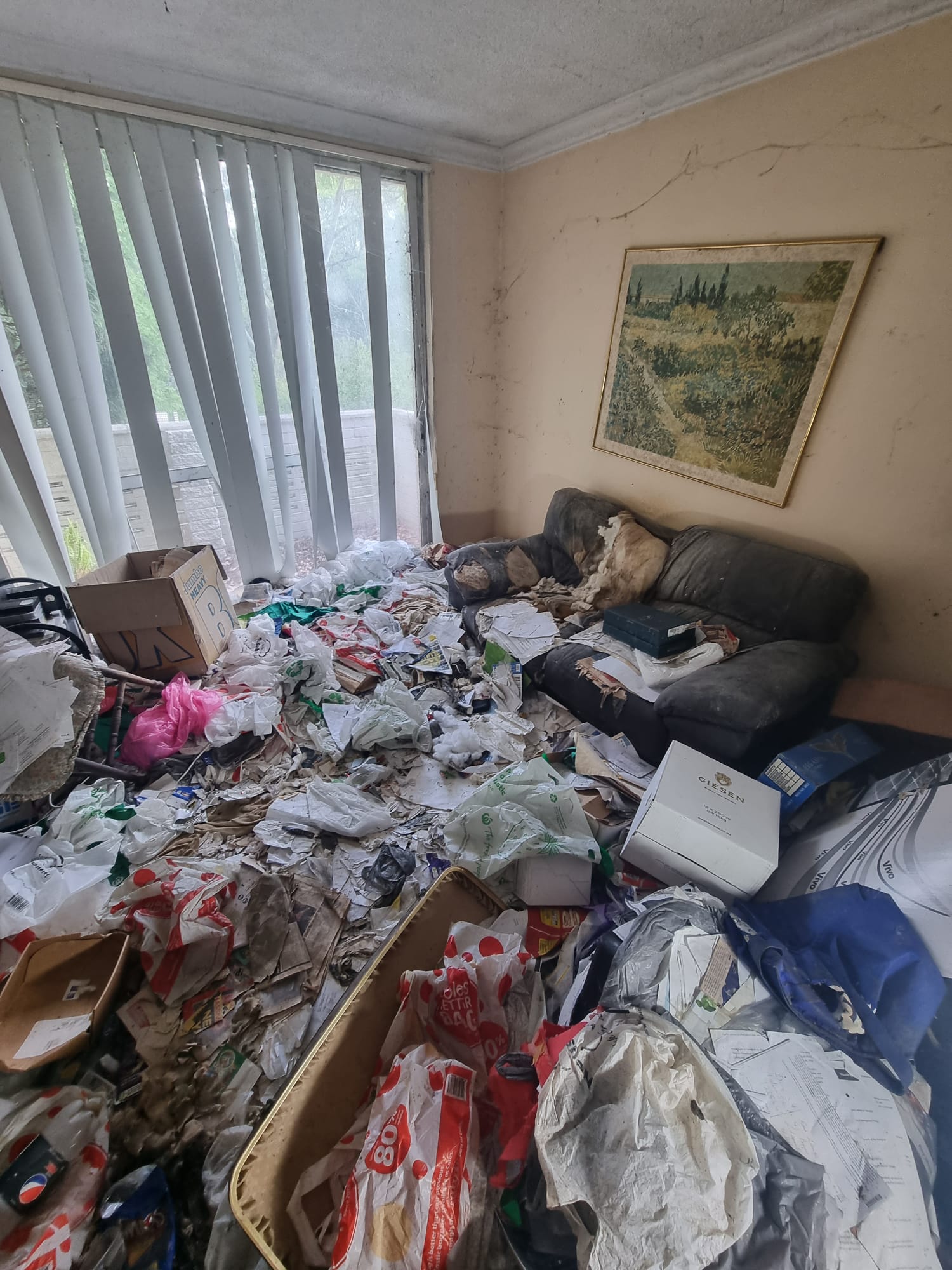
Clearing a severely cluttered or hoarded property is rarely as simple as hiring a skip bin and throwing everything away. A house may contain decades of accumulated possessions, valuable belongings hidden amongst everyday items, and areas that have become difficult or unsafe to access.
For families, executors and property owners, knowing where to begin can be one of the biggest challenges.
A professional hoarder house clearance provides a structured way to approach the task, from the initial assessment through to removing unwanted contents and preparing the property for its next use.
At Total Estate Clearance, we’ve completed over 500 property clearances across New South Wales, including properties affected by extensive clutter, neglect and challenging access conditions.
Here’s what you can expect when arranging a professional hoarder house clearance.
1. The Initial Property Assessment
Every hoarded property is different.
Some homes have heavily cluttered bedrooms and living areas but relatively clear access. Others may contain accumulated possessions from floor to ceiling, with entire rooms inaccessible.
The first step is understanding the scale and condition of the property.
During an assessment, a professional clearance company will consider the volume of contents, access restrictions, potential hazards and the services required.
For example, a single-storey home with driveway access presents different logistical challenges from an upstairs apartment where everything must be carried through a lift.
Garages, sheds, roof spaces and outdoor areas should also be included in the assessment.
As a general rule, a hoarded property will require an on-site inspection before an accurate quotation can be provided.
2. Identifying Items That Must Be Retained
One of the greatest concerns families have about a hoarder house clearance is accidentally losing something important.
A property containing thousands of individual items may also contain jewellery, financial documents, family photographs, antiques or sentimental possessions.
Before clearance begins, the person authorised to make decisions should identify belongings that must be retained.
Where possible, these items should be removed or clearly separated from unwanted contents.
If the property is still occupied, the resident’s wishes and consent are particularly important. Decisions should not be made simply because other family members consider certain possessions unnecessary.
For deceased estates, the executor or other authorised representative should establish which belongings can be removed.
Professional clearance services can assist with sorting and identifying items for further review, although no sorting process can guarantee that every concealed valuable will be discovered.
3. Assessing Potential Health and Safety Hazards
Heavily cluttered properties can present hazards that are not immediately apparent.
Accumulated belongings may conceal broken glass, sharp objects, damaged electrical equipment or unstable stacks of furniture.
Other potential concerns include pest activity, mould, contaminated materials and blocked access routes.
Older properties may also contain suspected asbestos-containing materials, particularly in building products or damaged outbuildings.
Many potential hazards can be identified during the initial inspection. However, concealed hazards may only become apparent once the clearance is underway. If unexpected hazardous materials are discovered, we will notify the client and agree on the appropriate next steps before proceeding with the affected work.
4. Removing the Accumulated Contents
Once the scope of work and retention instructions have been agreed upon, the physical clearance can begin.
Depending on the property, this may involve removing furniture, clothing, books, appliances, household goods and large quantities of general rubbish.
The work is usually approached systematically, allowing access to be established and contents to be removed without creating unnecessary hazards.
5. Separating Reusable Items From Waste
Not everything removed from a hoarded property necessarily belongs in landfill.
Furniture, household goods, books and other possessions may still have practical or financial value.
Where their condition permits, suitable items can be separated for donation, resale or recycling.
However, charities generally have acceptance requirements, and items affected by contamination, moisture damage or significant deterioration may not be suitable for donation.
The disposal process must also account for materials requiring separate handling.
6. Cleaning the Property After Clearance
Removing the accumulated contents is often only part of the job.
Once rooms are empty, previously concealed areas become accessible.
Floors, walls, kitchens and bathrooms may require extensive cleaning, particularly where furniture or possessions have remained in place for many years.
Depending on the property’s condition, further work might include removing accumulated dust and cobwebs, cleaning heavily soiled surfaces, addressing odours or arranging specialist treatment for contamination.
It’s important to distinguish ordinary cleaning from specialist remediation.
Properties affected by extensive mould, sewage, bodily fluids or other significant contamination may require additional assessment and specialist procedures.
Not every property will need this level of work, and the necessary cleaning should be identified during the assessment or as conditions become visible.
7. Clearing Gardens, Garages and Outdoor Areas
The condition of the house is only one consideration.
Hoarded properties frequently have substantial accumulations in garages, sheds, carports and gardens.
Outdoor areas may contain discarded furniture, building materials, machinery, scrap metal and general rubbish.
Vegetation can also become overgrown when regular property maintenance has been difficult.
Clearing these areas can improve access and make the property easier to inspect, maintain or prepare for sale.
Total Estate Clearance can combine interior clearance with garden maintenance, outdoor rubbish removal and exterior cleaning where these services are included in the agreed quotation.
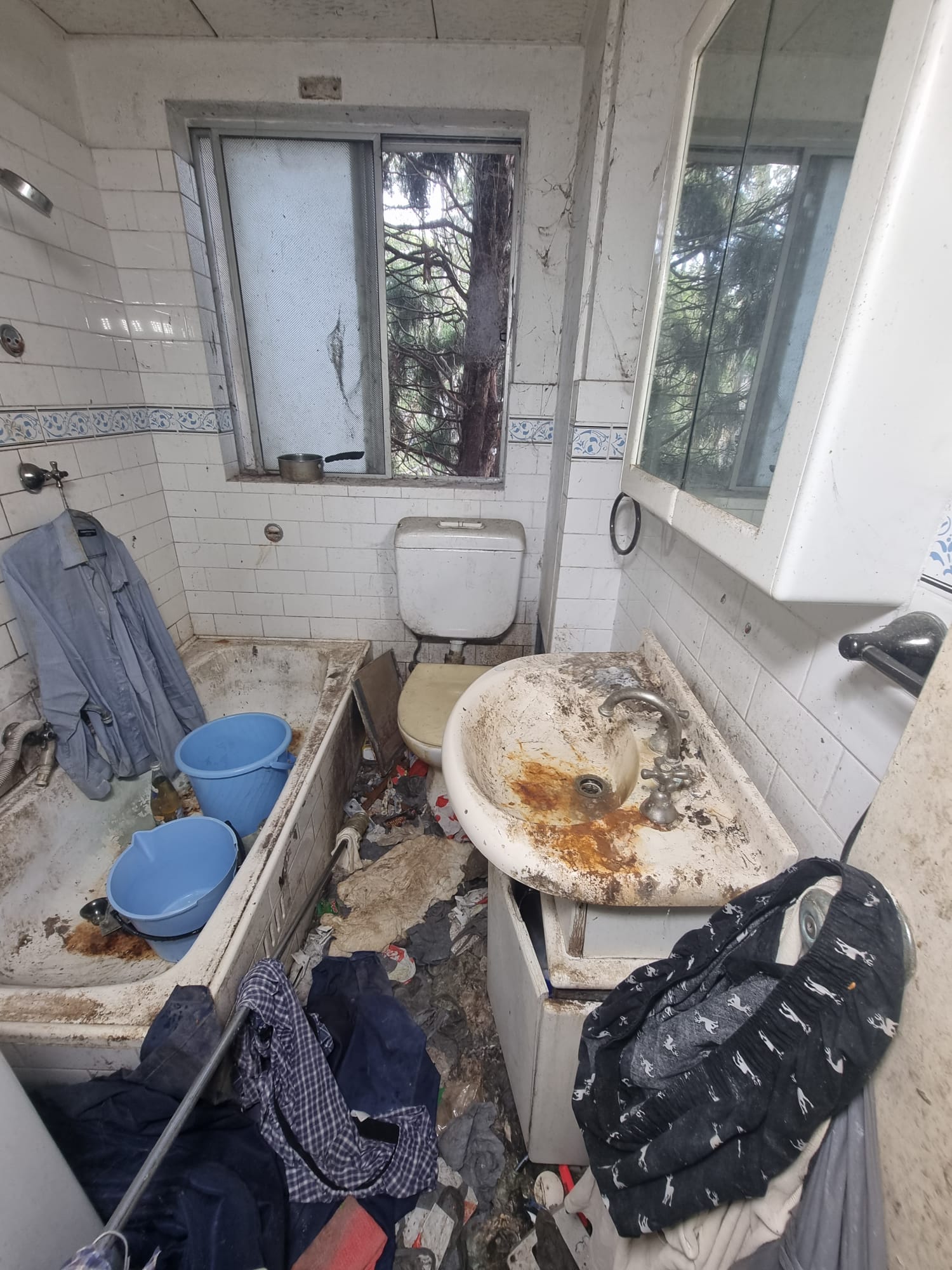
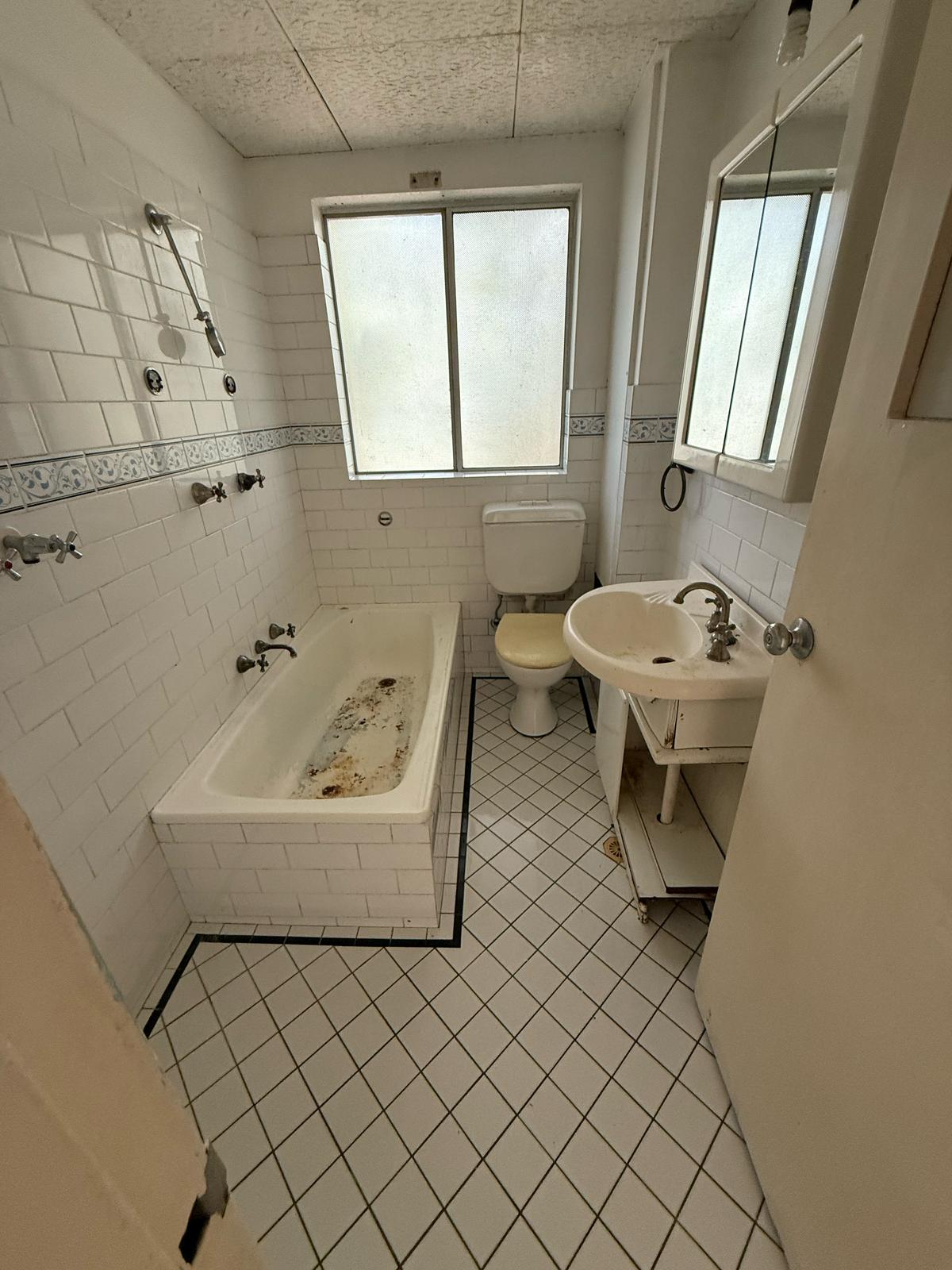
8. Preparing the Property for Sale or Reoccupation
Once the clearance and cleaning are complete, the property’s condition can be assessed more accurately.
For deceased estates, this may be the point at which an executor can arrange real estate photography or discuss further improvements with the selling agent.
For rental properties, the owner or managing agent can determine whether repairs, maintenance or additional cleaning are required before new occupants move in.
In some cases, the clearance reveals damaged flooring, walls or fixtures that were previously hidden.
These repairs are separate from removing unwanted contents and should be assessed individually.
The objective is to leave the property accessible and ready for whatever work comes next.
How Long Does a Hoarder House Clearance Take?
There is no standard timeframe.
A moderately cluttered apartment with straightforward access may be considerably quicker to clear than a large house containing decades of accumulated belongings.
Factors influencing the duration include:
- The volume and type of contents
- Property size and number of rooms
- Access for workers and vehicles
- Requirements for sorting and retaining belongings
- The presence of hazardous or contaminated materials
- Additional cleaning and outdoor clearance requirements
Some properties can be cleared relatively quickly, while particularly extensive jobs may require several days or longer.
A proper assessment provides a more reliable indication of the likely timeframe than estimates based solely on the number of bedrooms.
How Much Does a Hoarder House Clearance Cost?
The cost depends on the actual work involved.
Labour, transport, disposal fees, property access and the volume of material all influence the quotation.
Specialist cleaning or hazardous material management can introduce additional costs.
For this reason, a heavily cluttered two-bedroom property may require more work than a relatively empty four-bedroom house.
When requesting a quotation, provide photographs of all affected areas and explain whether cleaning, garden maintenance or other services are required.
This helps establish a realistic scope of work and reduces the likelihood of unexpected changes.
Professional Hoarder House Clearance Across NSW
At Total Estate Clearance, we understand that clearing a heavily cluttered property can be a challenging and sometimes sensitive undertaking.
We provide comprehensive hoarder house clearance services throughout Sydney, the Central Coast, Newcastle and regional NSW, handling everything from removing accumulated household contents to cleaning, garden clearance and preparing properties for sale.
With over 500 successful property clearances across NSW, we have the experience and equipment to manage properties of varying sizes and conditions.
Contact Total Estate Clearance at www.totalclearance.com.au to arrange an inspection and obligation-free quotation.